Thursday, 6 March 2014

The Russian Revolution


In the 19th century, efforts to modernize Russia by freeing the serfs (peasants), building factories and introducing democracy came to nothing. Tsar Alexander II made reforms, but, in 1881, he was assassinated. Tsar Alexander III undid most of his father’s work, and in desperation some Russians turned to revolution.


The first serious rebellion broke out in 1905, after troops fired on striking workers in the Russian capital, St Petersburg. The rebellion was soon crushed and its leaders, including Lenin, were sent into exile. Lenin remained in exile until 1917. The tsar, Nicholas II, who had come to the throne in 1894, promised the people more civil rights, but this promise was soon broken.
When World War I started, life for most people in Russia went from bad to worse. The railways no longer carried food, fuel and supplies to the cities. The economy almost collapsed and people went hungry. In March 1917, riots broke out again. This time the troops joined the rioters Nicholas abdicated and his advisers resigned.


A new government was set up, led by Alexander Kerensky, but unrest continued. The Bolsheviks, led by Lenin, planned a take-over. In November they attacked the Winter Palace in St Petersburg and seized power (an event known as the October Revolution, because Russia used a different calendar at that time). The Bolsheviks moved the capital to Moscow and made peace with Germany. They broke up large estates and gave the land to the peasants, while workers took control of the factories. In 1918, civil war broke out between the Bolshevik Red Army and anti-Communist White Russians. This ended in victory for the Bolsheviks in 1921. The following year, the Union of Soviet Socialist Republics was formed. Lenin died in 1924, and was succeeded by Joseph Stalin. Stalin’s rule was tyrannical. He had millions of people killed or sent to prison camps, where they died. 
LENIN
Vladimir Llyich Ulyanov (1870-1924) used the name Lenin. He led the Bolsheviks from 1898, but was exiled from 1905 to 1917. On his return, the Bolsheviks seized power and he became Russia’s new leader.

World War I


World War I began as a European quarrel, caused by rivalry between nations. It spread across the oceans, to the Middle East and to Africa. The war cost the lives of more than 8 million soldiers, many killed in awful trench warfare. The war so frightful that afterwards people said it had been the Great War and ‘the war to end wars’. It was not.
Between 1880 and 1907, the European powers had formed alliances and increased their armies and navies. On one side stood the Allied forces: Britain, France, Russia, Japan and, later, Italy. On the other were the Central Powers: Germany, Austria-Hungary, Turkey and Serbia. The spark that started the war was the assassination in Sarajevo of Austrian Archduke Franz Ferdinand by a Serb in June 1914.
WAR PLANES
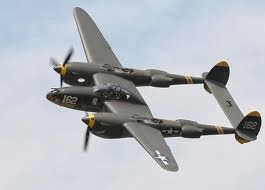
 World War I (1914-18) was the first war in which aeroplanes were widely used. They were first used to spy on enemy trenches and troop movements. Later, they were used in aerial combat and in bombing raids.
This led to a series of mobilizations (preparations for war), and, on 4 August, German armies invaded Belgium. This drew Britain, Belgium’s ally since 1837, into the war.
World War I was fought mostly on land (there was only one big naval battle, at Jutland in 1916). Both sides became bogged down in trench warfare, their armies unable to advance without huge losses. Soldiers had to go ‘over the top’ (leave the trench), scramble through their own barbed-wired defences, then cross open ground (‘no-man’s land’) to reach the enemy lines. So quick and powerful were the machines guns and heavy artillery guns that soldiers were killed in their thousands. In the Battle of the Somme alone (1916), there were over a million casualties.
By 1917, the Russian army was so weak that it began peace talks with Germany. For a while, Germany had an advantage, but in 1918 the arrival of more than a million soldiers from the United States boosted the Allies, who began to advance. There were food shortages and unrest in Germany, and emperor Wilhelm II abdicated. On 11 November, an armistice was signed between Germany and the Allies, ending the war.

Votes for Women


Women’s right to vote, suggested by British author Mary Wollstonecraft in her book  A Vindication of the Rights of Women (1792), was a long time coming. Groups campaigning for political reform in the 1830s were only concerned with obtaining the vote for all men. Women were not included.
In the mid-1800s, however, a movement was started in the US that aimed to win voting rights for women across the world. It held its first meeting in Seneca Falls, New York, in 1848. Many other public meetings followed, often fiercely opposed by those who did not want women to have the right to vote. Speakers included Sojourner Truth and Harriet Tubman, both of whom had been born slaves.
The movement grew, and in 1890 Wyoming became the first US state to allow women to vote in local elections. Three years later, New Zealand became the first country to allow women to vote in national elections. In Britain, this triumph encouraged various women’s suffrage (right to vote) societies to unite in 1897.


At first, their campaigns were peaceful, but in 1903 Emmeline Pankhurst set up a new society, the Women’s Social and Political Union (WSPU), which advocated action rather than words. The WSPU held demonstrations and attacked property in protest against women’s lack of rights. Many members were sent to prison, and went on hunger strike to draw attention to their cause.
With the outbreak of World War I in 1914, many women took on men’s jobs, proving that they were just as capable as men. In 1918, the vote was given to all British women over the age of 30 (the voting age for men was only 21). Women in the US were given the right to vote in 1920. In 1928, the voting age for British women was lowered to 21.

The Modern World


From the start of the 20th century, rapid changes in society, in science and technology, and in everyday life occurred. It was the age of aircraft, television, space rockets, computers and genetic engineering. The world’s population increased dramatically to over six billion people today. Many of these people were poor and hungry, with others living in comfort and luxury.
In many countries people demanded equal rights and there were many revolutions. The Russian Revolution in 1917 made some people believe that Communism would be the new world order. Anti- communist revolutions in eastern Europe in the 1980s and 1990s showed this was not so. There were two world wars (1914-18 and 1939-45), and many smaller wars. World War I ended in defeat for Germany and its allies, but the peace that followed did not last long.
World War II was the most costly war of all time, and the most horrific.
By 1950, the United States was the strongest power, for a while challenged by the Communist Soviet Union in what became known as the Cold War. Europe, badly damaged by war, reshaped itself as the European Union. Japan modernized and became an industrial powerhouse. Old empires ended, and new alliances were made. New independent nations joined the United nations, including India and the New countries of Africa. China emerged from years of isolation. 

New developments such as the internet, satellite TV and world tourism made the world seem smaller. Problems in one country often affected others. Global concerns, such as the threat to the tropical rainforests or fast-dwindling oil supplies, could not be contained within national borders. Terrorism a new threat to peace. So fast is the pace of change that it is hard to predict what the world will be like when the 21st century draws to a close.

Scramble for Africa


In 1880, less than five per cent of the African continent was ruled by European powers. Most European nations had been content with trading colonies around the coast. Only the British and the Boers in South Africa had moved inland and set up new settlements. But within 20 years, the situation changed completely, in what is known as the Scramble for Africa.
Seven Europeans nations took control of the whole of Africa, apart from Liberia and Ethiopia. By 1884, Belgium, Britain, France, Portugal and Spain had started to claim new colonies in Africa or expand their old ones. The newly unified countries of Germany and Italy also wanted shares of the continent. To prevent serious conflict, the Europeans powers met at an international conference on Africa held in Berlin.
CECIL RHODES
British-born Cecil Rhodes (1853-1902) went to Natal in southern Africa when he was 17 years old. He became a member of the Cape Colony parliament in 1881 and prime minister in 1890. Rhodes helped to bring more territory under British control, but failed in his ambition to give Britain and empire in Africa that extended from the Cape to Egypt.
During the conference, the European nations decided to divide Africa among themselves. Little regard was given to the African peoples, their cultures or their natural boundaries. Resistance by black Africans, or indeed by white Boers in southern Africa, or indeed by white Boers in southern Africa, was crushed by well-equipped and well-trained European armies. Thousands of Africans died in the fighting, and many thousands more suffered hardship and hunger as their traditional ways of life were destroyed. Some were forced to work as cheap labour in mines and on plantations, growing cotton, tea, coffee and cocoa for export back to Europe. Europeans started farms in suitable areas, and built roads and railways.


In the better-run European colonies, schools and medical centres were set up for local people. In the worst-run colonies, African people were treated little better than slaves. Under European rule, Africans gained access to new ideas, but had no say in how their access to new ideas, but had no say in how their countries were governed and how their lives were run.